MDEP (Microsoft Devices Ecosystem Platform) Explained: Microsoft Teams Android devices and beyond
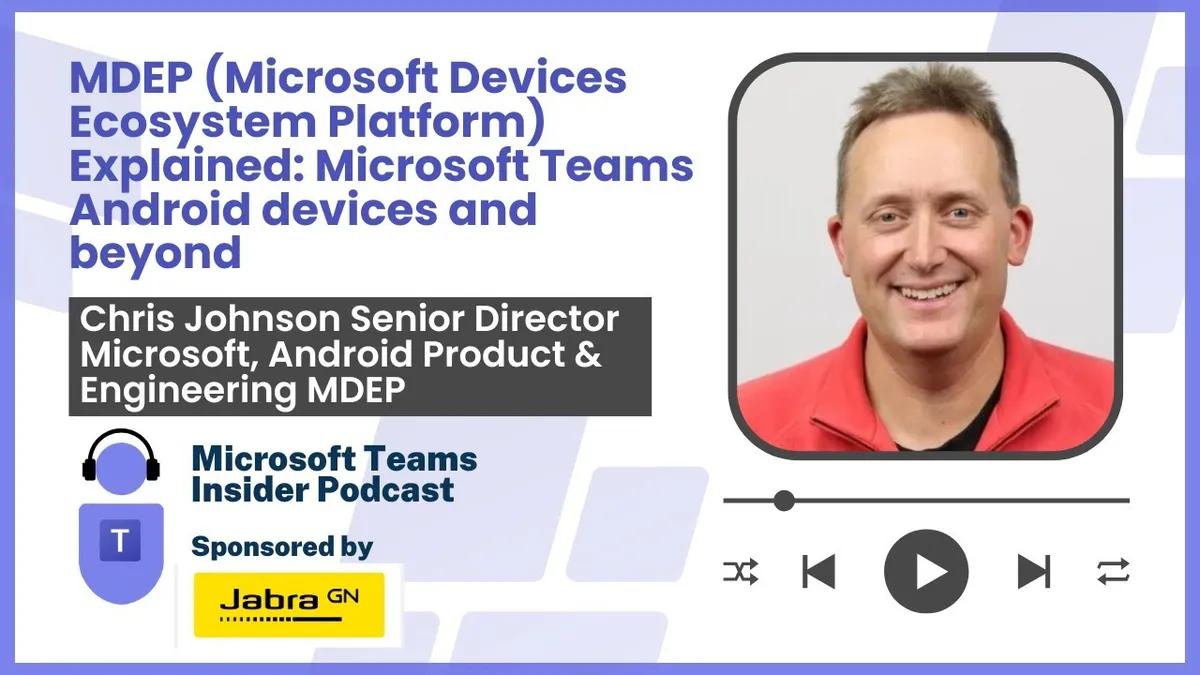
Chris Johnson, Senior Director for MDEP at Microsoft and a 25-year Microsoft veteran who previously led two generations of Surface Duo, explains what the Microsoft Devices Ecosystem Platform actually is and how it sits between Android Open Source, silicon vendors and OEMs.
Prefer audio?
Who should listen: Microsoft 365 service owners, UC/AV procurement and device managers evaluating Android-based Teams Rooms and panels, and OEM/reseller technical staff who need to understand patching commitments and lifecycle risk on Android meeting devices.
Guest: Chris Johnson — Senior Director, Android Product & Engineering (Program Management) for MDEP, Microsoft
Chris Johnson, Senior Director for MDEP at Microsoft and a 25-year Microsoft veteran who previously led two generations of Surface Duo, explains what the Microsoft Devices Ecosystem Platform actually is and how it sits between Android Open Source, silicon vendors and OEMs. He covers the release and patching cadence, long-term support commitments, where OEMs can still differentiate, and what is coming with the Android 15 release and new device categories.
Many thanks to Jabra, sponsor of this episode.
Key insights
- MDEP is an Android Open Source-based, non-GMS platform hardened by Microsoft and reduced to a tightly scoped kiosk mode for specific device classes — it is not a general-purpose Android build any OEM can pick up. ▶ 4:06
- MDEP comes out of the Windows/OS side of Microsoft, not the Teams engineering group. Microsoft takes device requirements from Teams but stays out of the device certification process, which remains between the OEM and the VoS provider (Teams, Zoom or others). ▶ 8:12
- Silicon support is deliberately narrow and negotiated: Qualcomm, MediaTek, Rockchip and NXP today, with a commitment that a supported chipset gets updates for the lifecycle of the silicon provider on that Android version. ▶ 5:38
- Cadence is monthly security patches (silicon fixes, Google's Android patches and Microsoft platform fixes) plus two to four major feature releases per year, delivered to OEMs who are contractually committed to pass them on — the counter to Android devices being treated as unpatched appliances. ▶ 9:14
- 2025.1 is the last feature release on Android 13 and becomes the long-term servicing branch for partners staying there; 2025.2 moves to Android 15 with autopilot-style deployment, extensive remote management and zero trust security work. ▶ 10:46
- OEMs must sign a platform distribution agreement covering specific makes and models, so buyers can tie an MDEP device to a defined long-term support commitment rather than hoping a low-volume device keeps getting patched. ▶ 13:20
- Devices do not converge on sameness: Microsoft supplies the base plumbing while OEMs and ODMs differentiate on multimedia, streaming, camera, audio, management layers and on-device AI — Microsoft ships a centralised AI framework with ONNX and on-device model support as the express lane. ▶ 20:00
- The stated goal is parity with Teams Rooms on Windows via a burn-down list, with Johnson arguing the Android codebase may let features ship faster than on Windows. ▶ 19:00
- MDEP is expanding beyond UC into interactive and non-interactive displays for enterprise-grade digital signage, with new partnerships and OEM device launches trailed for InfoComm. ▶ 15:57
Insights summarised by AI from the episode transcript, reviewed by the Empowering.Cloud team.
Listen: Apple Podcasts · Spotify · Other platforms


Comments ()